30-second summary
- The problem
- Pet hotels exist, but few people know where to find them, and many owners don't trust leaving their pet with strangers.
- What we found
- The app doesn't compete with other hotels. It competes with family, who people already leave their pets with today.
- What we did
- A survey of 41 pet owners, a persona, flows for who books and who hosts, a style guide and screens.
Context
The professor's brief
Many people adopted a pet during the pandemic. As life went back to normal, a new problem appeared: where to leave the pet when traveling? Pet hotels exist, but they're still little known.
The assignment was an app or website that brought these hotels together and made booking easier. Before designing any screen, the group wanted to know whether the problem really was finding the hotel.
The research path, in 4 steps
- What we assumed"The hard part is finding a pet hotel."
- SurveyMost would leave their pet with a company, but those who wouldn't talk about fear of mistreatment.
- Who they leave it with todayThe most common answer was family, well ahead of hotels.
- The findingThe problem isn't finding the hotel. It's trusting it the way you trust family.
Step 1
We asked 41 pet owners
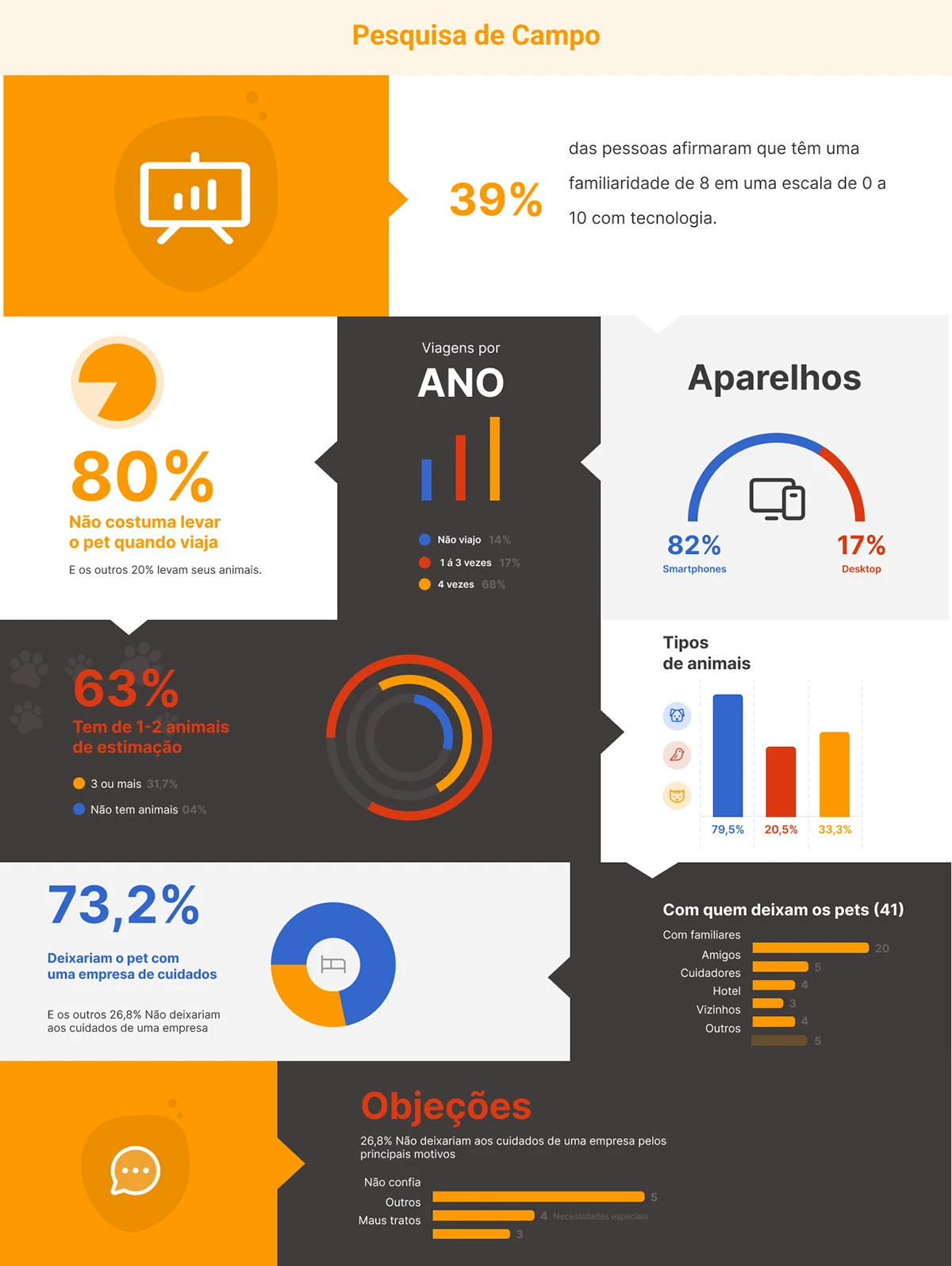
We ran an online survey and got 41 answers. We asked how people travel, who they leave their pet with and whether they would leave it with a company.
- 80%don't usually take their pet when they travel. The need to leave it with someone is real
- 73%would leave their pet with a pet care company. The other 27% wouldn't
- 82%picked the smartphone among the devices they use, versus 17% who picked a computer
Two answers changed the direction of the project:
- Fear. Those who wouldn't leave their pet with a company mentioned distrust and fear of mistreatment.
- Family. For "who do you leave your pet with today", the most common answer was family, well ahead of hotels.
The finding
The app doesn't compete with other hotels. It competes with your mom, your brother or your neighbor, and it needs to feel just as safe.
The smartphone answer also confirmed the choice of an app instead of a website.
Step 2
Who the app was for
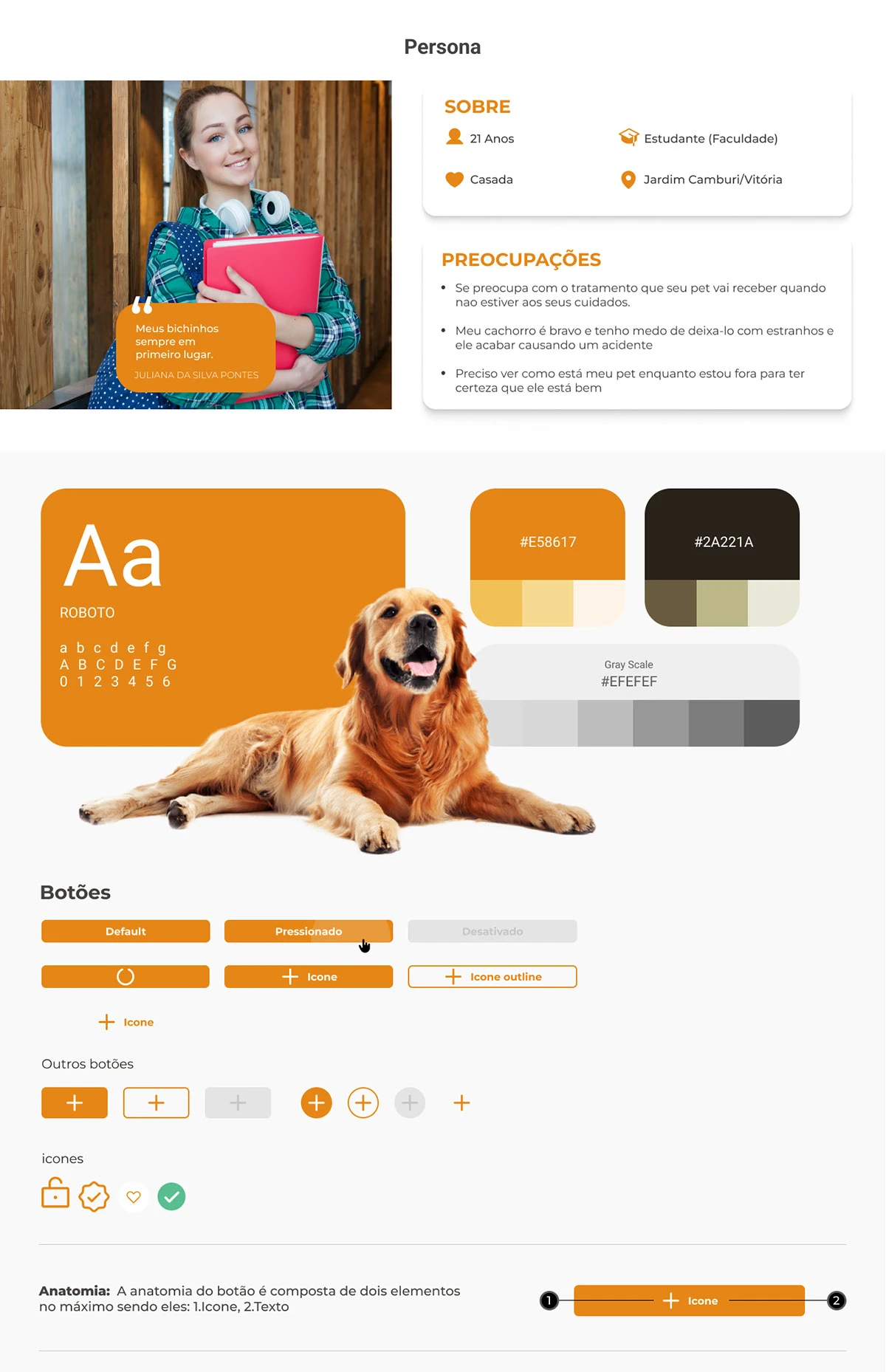
We built a persona from the answers: a 21-year-old married student who lives in Jardim Camburi, in Vitória. Her worries are the same ones that came up in the survey:
- how her pet will be treated when she isn't around;
- her dog is aggressive with strangers, and she's afraid an accident could happen;
- she wants to see how her pet is doing during the trip, to be sure everything is fine.
Step 3
Two apps in one
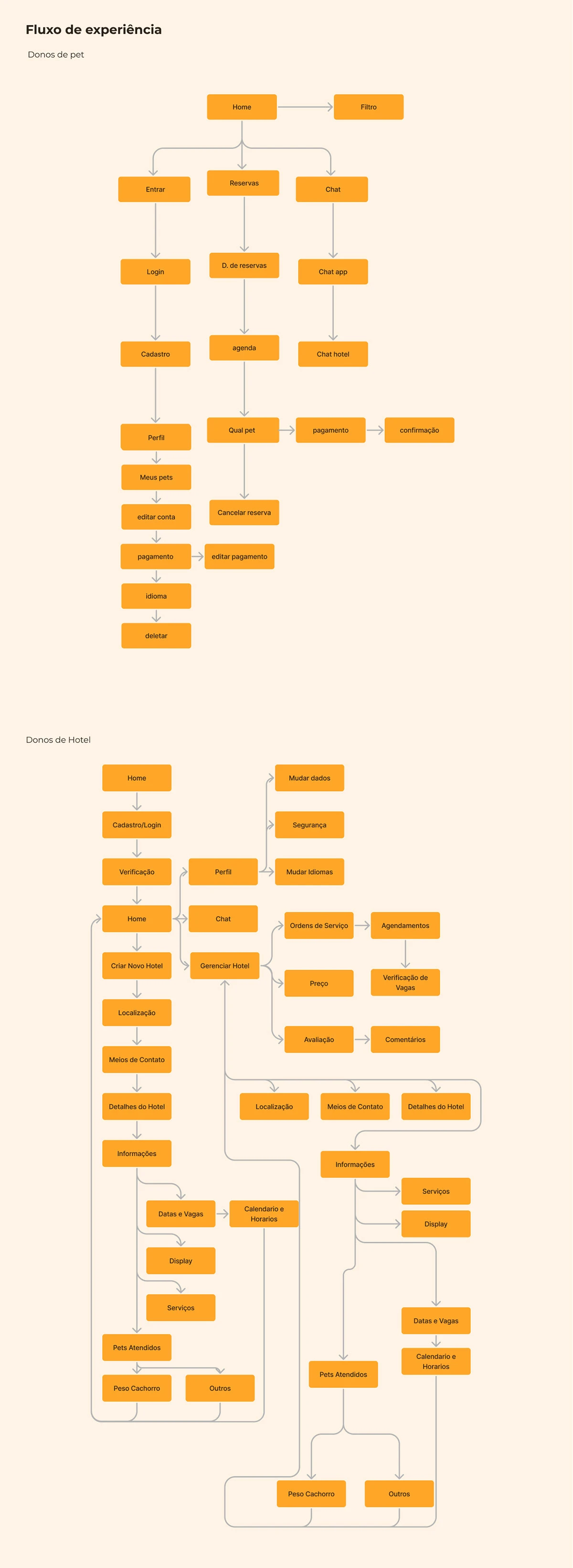
A booking app has two sides: who books and who hosts. We designed the flow for both:
Pet owner
- Searches for and picks a hotel.
- Books and pays.
- Chats with the hotel during the stay.
Hotel owner
- Registers the hotel.
- Manages bookings.
- Answers owners through the chat.
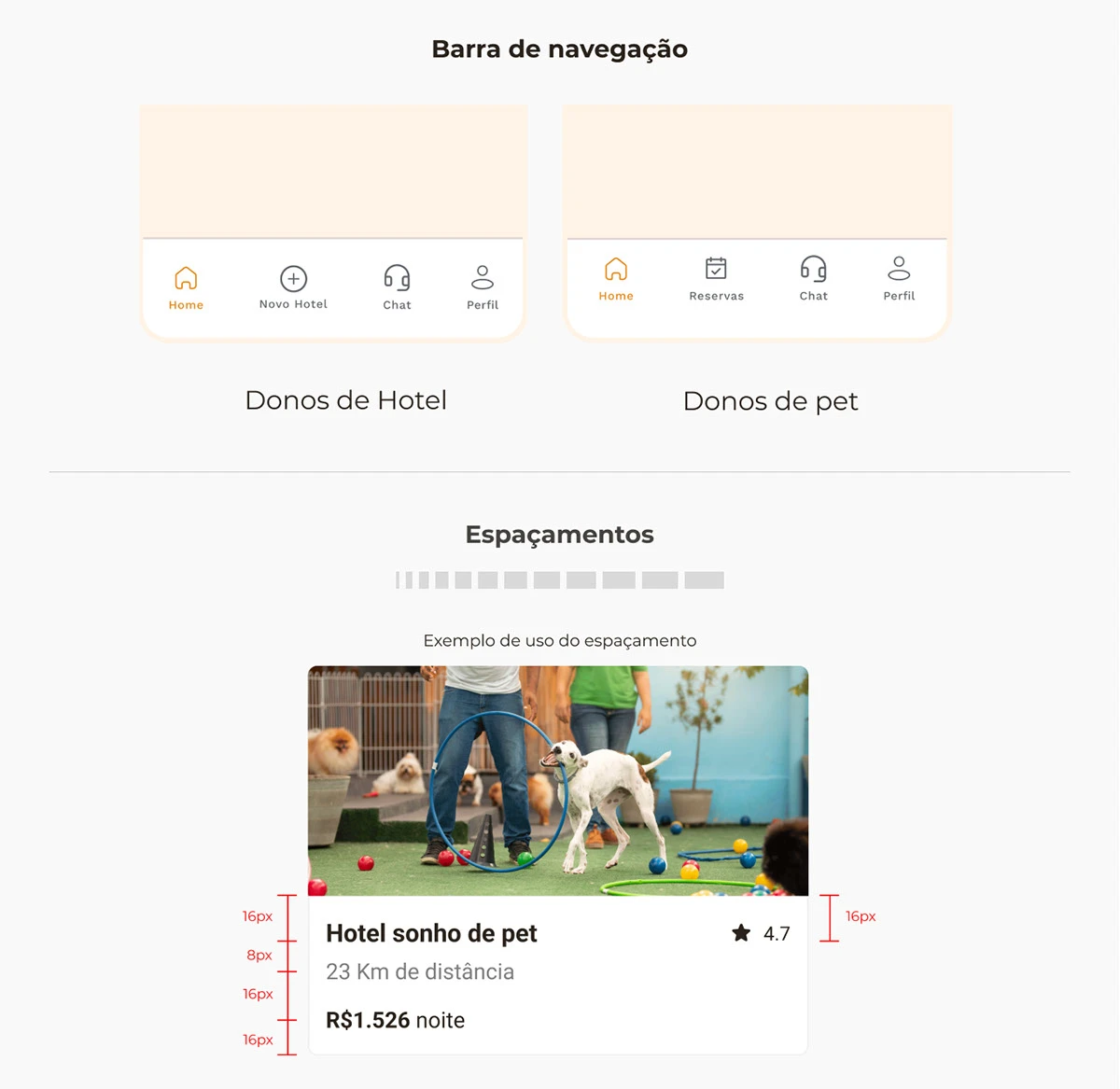
The chat sits in the main bar for both. It's the most direct answer to the persona's worry: being able to ask how the pet is doing at any time.
Interface
The screens
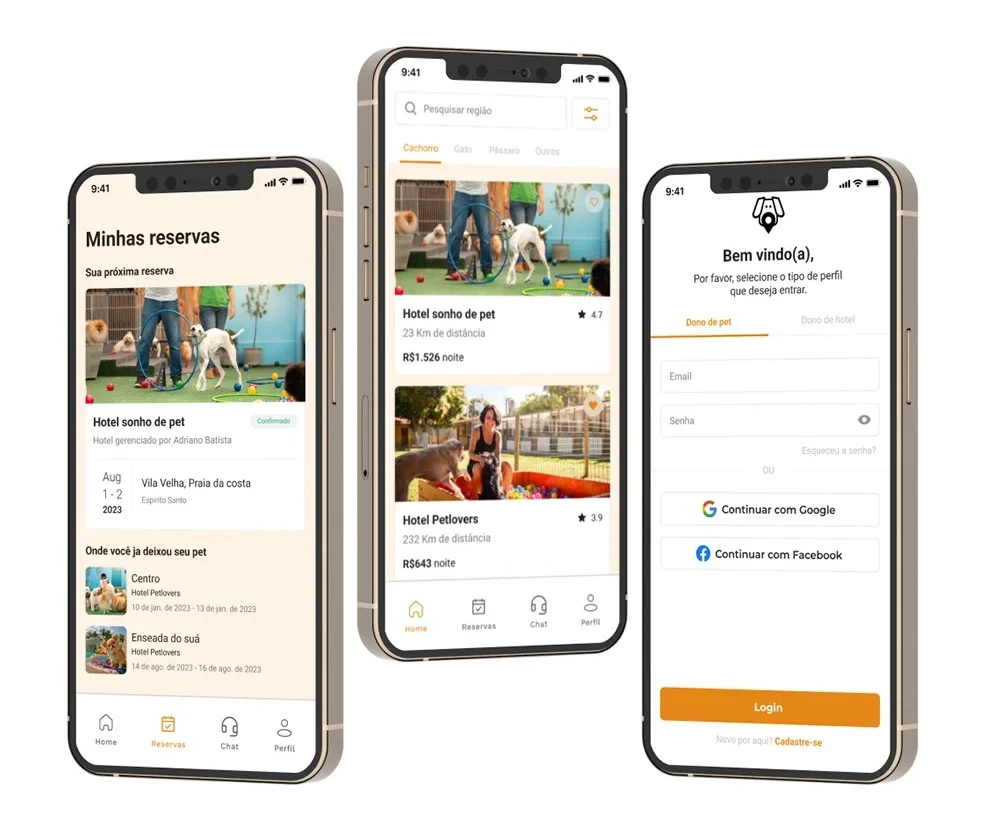
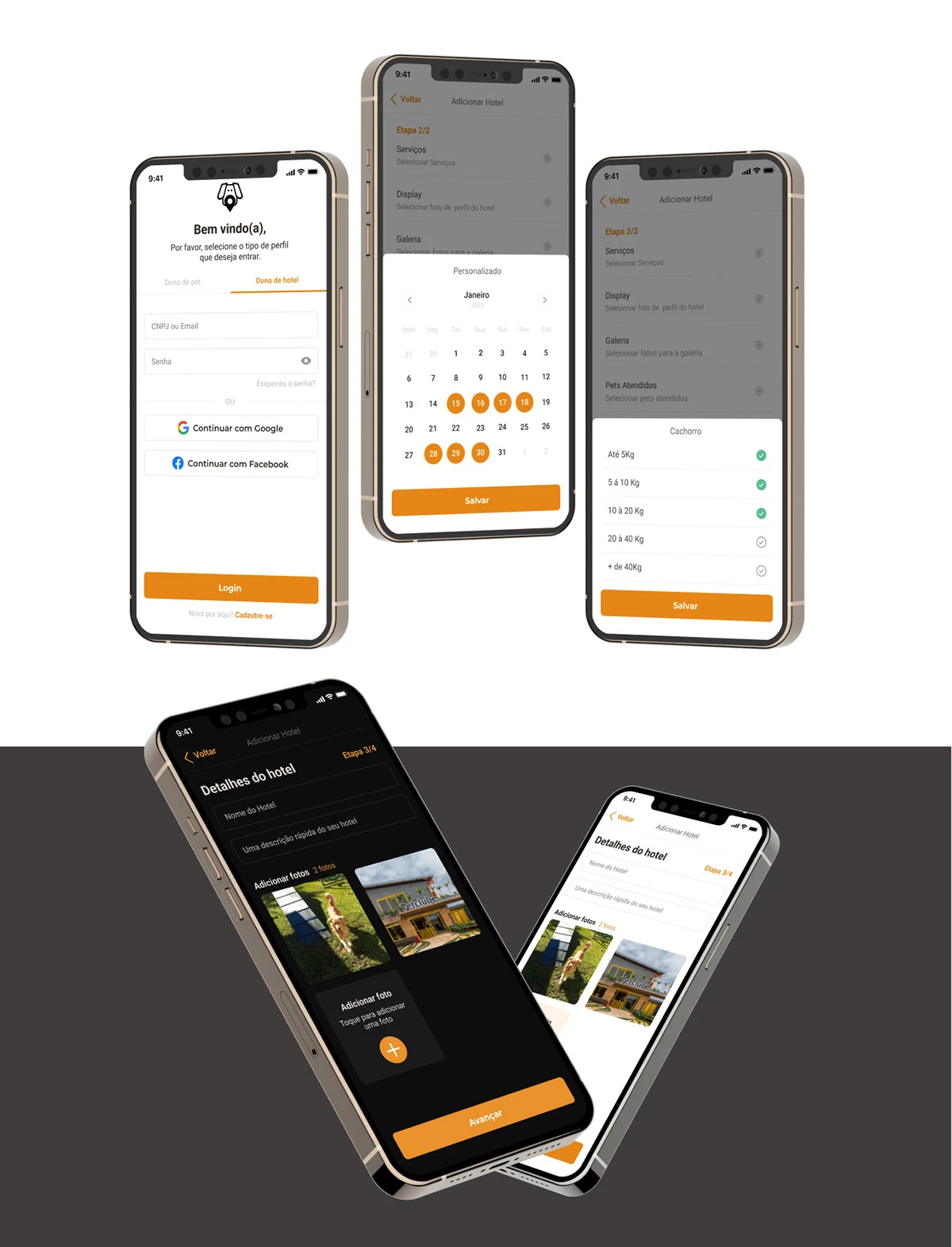
The hotel list shows a photo, distance, rating and nightly price. "My bookings" gathers the stays, and login works with a Google or Facebook account, so people don't need yet another password. The screens are in Portuguese.
Looking back
What I'd do differently
To be honest: the research pointed to trust as the biggest obstacle, but the screens still treat the hotel like any other product. Today I would change four things:
- Show trust signals on the hotel cardNot just rating, distance and price. Also: whether the hotel sends photos during the stay, has a vet, accepts aggressive dogs, and what other owners said.
- Start with one side onlyThe hotel owner's flow is much bigger. In a first version, I'd focus on the pet owner and add hotels by hand, to see whether people book before building everything.
- Test the screens with peopleThe research came before the screens, but the screens weren't tested with anyone. I'd ask five pet owners to pick a hotel in the prototype and say out loud why they would or wouldn't trust it.
- Use family as the benchmarkThe question that would guide the redesign: what makes someone trust their sister to look after the dog? Knowing the person, seeing the place and getting updates.
Takeaways
What I learned
It was the first project where I saw research change the question. I started out wanting to solve "where to find a hotel" and ended up understanding the job was to solve "who to trust".
It was also the first time I designed, together with the group, for two audiences at once. I learned that each side needs its own menu, even inside the same app.